Showing posts with label imagine. Show all posts

Friday, January 27, 2012

Coaching - take them where they CAN go

I think that the word coach is often misused in the business world and in general. To coach literally means to take someone where they want to go. A lot of managers think that by setting a forecast for their employees or a goal for the organization, and once on that path that reminding their employees of that goal, that is coaching. Coaching is a form of teaching but it goes further than that; we can teach someone how to do a job or task but are we working on moving that person forward in their own self or professional development. If we are truly coaching then we are helping people move forward with their goals. You will know you are coaching when you learn and grow during your sessions as well. Coaching is a two-way street, both parties grow and develop at the same time. There are several important tools we need to develop to be a good coach and I will run through some of them.

Listen


The most important thing for a coach to do is to listen. You need to listen to your people and where they want to go, you need to listen to your inner self about how to take your people forward and you need to listen all the way through the process. You will never stop listening, even when you are in the middle of a coaching situation you will be listening for clues about how to move forward or whether the session is effective. During a coaching session it is important to listen, without interruption, what your employee/student is telling you. Only then is it okay to digest the information and try to move forward. It is extremely important that you listen first as this will build trust with your student. You can not be an effective coach until they trust you. You can coach without the trust, but you will be most effective once you have their trust. 
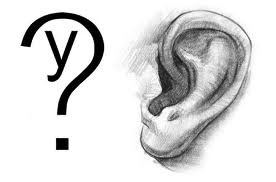
Ask questions

Ask lots of questions. Make sure you are asking questions that get the person to reflect and have to think about the answer. Yes or no questions at times are okay, as long as you follow up with another question to find out why. Why questions are very powerful to find out the true meaning of something or the reasoning behind the way someone does something or acts a certain way. By asking question you will build additional trust, because you have shown an interest in that persons wants and needs. Notice in the picture above that the outside of the ear is shaped like a question mark and the inside like a 'y' (why)? I don't think this is a coincidence! 

Explore

After listening and asking questions you must then explore so more. You have now built some trust so asking exploring questions and listening some more will not seem like an inquisition but a way to help. Exploration is about finding a path, the answer to one of your questions, and following that path to the end to see where it takes both of you. Exploration is not just for you, but also for the student/employee to go on. Explore the answers and take that path to see where it goes. If you just "ask" questions you might not find the right path unless you explore the answers to those questions. It is important that you guide the individual down the path and let them make their own discoveries or new paths as you go. When you get to the end of the path you will know it, you will see it in their eyes; that "AHA" moment.

Commitment

Once you have asked questions, listened, and explored the paths those questions led you down, the next step is commitment. You must get a commitment from the individual that this is the right path to be on. By seeking a commitment you will be able to then set a timeline for the commitment and it will lead you to your next step. This commitment is a 2-way street, the individual is committing to you that they will follow the path to the end and you are committing to them that you will be there walking the path with them. This is where you will set forth a timeline for which to reach the end of the path, but it is important that we set way-points along the way to stop and measure the progress to determine if we are still on track. You will both need to set specific measurement criteria to determine that you are on track to reach the goal. The commitment is not just for the goal, but also for each way-point and measurement criteria.

Challenge

Now that you have built trust by listening, asking questions and exploring; and now that you have both committed to the journey, it is time for the challenge phase. You can not challenge or push someone if they are not committed to the process. By this time, you have built trust and as long as you continue the steps above you will be able to challenge your student to push for more. During this phase you will use the timeline and specific goals to measure the progress and challenge them to go further. 

Take them where they CAN go

There is one thing I have left out that is important, take them where they CAN go. You will find individuals or groups that are either content to reach a certain level, don't believe they can move beyond that level or maybe they have failed to reach a certain level and given up on obtaining it. It is your job to take them where they CAN go, not just where they want to go. This is part of the challenge step and can only be truly realized once you have complete trust and they see they are making progress toward the commitment.

These are not all of the tools you need in your toolbox to be an effective coach, but they are the ones you must utilize to get the most out of your coaching sessions. Have you ever wondered why in professional sports that in Football they refer to the Head Coach, but in Baseball the refer to the Manager? Sure there are times when a baseball manager is referred to as coach, but more often than not he is referred to as the manager. Why is that, leave me your thoughts.

Wednesday, January 25, 2012

The most powerful word in sales

Imagine you are at the beach. The sun is bright and glistening off the water. The sound of sea gulls fill the air as the waves gently lick the sand. An easy breeze flows through your hair and fills your nose with the salty air. Imagine you have a drink in your hand strolling down the beach. Do you have the visual in your mind's eye?

Now a few questions: what beach were you at? Who were you with? Was there other people on the beach? What time of day was it? What kind of drink did you have in your hand? Was it in a glass, a bottle, a red solo cup, a coconut shell with an umbrella or something else?

If you took the time to imagine yourself at the beach you can probably answer most if not all of those questions. How is it possible that everyone reading this was at the beach but had different answers? The word imagine makes your mind wander and takes it places and paints pictures without you even having to stop and think about it. Not only does it paint a mental picture but the imagination of the mind can touch all the senses. Have you ever imagined something and you could "smell" the smells associated with that image? You "heard" the sea gulls in you minds ear in the exercise above and you could probably feel the sand in your toes.

Imagine -  to form a mental image of

Think about your sales opportunities; are you painting the mental picture of your client using your product. Maybe it is a job interview, paint the mental picture of what you can do for the company. The word imagine takes your brain away and allows it to wander. It will go places that you did not intend it to go.


When your opportunity starts to visualize the use of your product or what you can do for them it make the close that much easier. Stop for a minute and decide what you are selling and what the benefits are. Now imagine you are the customer and imagine what they want from your product and make sure you answer those needs. Imagine works both ways, you need to imagine yourself in your customer's situation and ask yourself, "If I were the customer, what would I want my product to do for me?". Ask questions of your client and find out what they want your product or service to do for them. Once you know the answers it is easy to build the imagine phrase.

I was in the floor playing with my 4 year old son and he asked me "Dad, can I imagine this is a fire station?".  He was talking about the space under the couch. When was the last time you spent the time to stop and imagine what you could do for someone? Why is it that as we get older we stop imagining and start thinking logically? Is it trained out of us? I don't know the answer to that question, but I know there are several companies that do it as well as a 4 year old: Apple, Disney, and Google are just a few.

Take the time today to imagine; imagine how your product could help someone or how your services could move a company forward. Once you have taken some time to imagine, you then can take others to that special place.


Tuesday, January 24, 2012

Social or Selling

Social networks are what their name implies; places to be social. Imagine you just walked into a party with a group of 100 of your friends and acquaintances and the first thing you do is yell out to the room "I sell life insurance, who wants to buy some!". Sounds ridiculous doesn't it?

It is 2012 and I am still amazed at how many people and business that are doing just that on Facebook, Twitter, Google+ and all of the other social networks. Let's go back to the party and see what normally happens at a social event.

Again imagine you just walked into a room of 100 friends and acquaintances; what is the first thing you do? You see the first person as you walk in and say hello, swap pleasantries and then talk about what has been going on in your life. You ask questions of the other person to build on the conversation and show interest in their lives. The normal course of conversation will be about what has been happening outside of work first and at some point you will wind up talking about business and how things are at work.

Is this what is going on in your business' social marketing? Oops, I think I just mentioned the word that confuses people into shouting across the room, to the entire crowd, what they do for a living. Marketing, we have all done it for years, we advertise our wares anywhere we can. But wait, isn't that what I am supposed to do is let people know what I do and what I can do for them? Yes it is, but just like our conversation above, there is a time for that. Imagine you are back at the party (by the way, what kind of drink do you have in your hand).

This time you are already at the party socializing with your friends and in walks that guy. As he walks in the room he yells to the crowd "My name is Jim and I sell cars, who wants to buy one!". Imagine how quiet and uncomfortable the room feels right now. Now imagine he is making a bee line right for you. You look around feverishly to find someone to talk to, someone to protect you from "that guy". Maybe you turn your back to him and make a bee line yourself for the hours d'oeuvre tray. Uncomfortable isn't it.

Are you making your "friends/followers" uncomfortable at the party? There is a time to talk business at the party and even a time to pass out a business card, just like there is a time to do the same on your social networks. The right mix is important, too much selling and you get tuned out and avoided.

Don't be THAT guy at the party!


P.S.: Earlier I asked you what kind of drink you had in your hand when you imagined yourself at the party. Leave me a comment and let me know and in the next post we will talk about the most powerful word in sales.