Showing posts with label lead. Show all posts

Friday, March 1, 2013

Dealer Puke!


The number one issue I hear when I am in a dealership consulting with Internet personnel is "I can't get anyone to call me back or respond to my emails!" Sound familiar? Do you hear this from your staff?

When was the last time you actually read the emails you are sending to your customers? How about the last time you listened to the voice-mail you salesperson left for that potential customer? If you have not done either lately, it is a good place to start to discover why your customers aren't calling back or responding to emails.

Are you giving them a reason to respond?

When I hear this complaint, the first place I go is to the CRM and review the emails that are being sent out. In every situation I find the same thing; Dealer Puke! That's right, Dealer Puke! We are sending emails that tell the customer how great we are, how much better our people are, how many xyz models we have in stock, how easy our Internet process is and a whole host of other self appointed accolades. In a lot of these cases, the specific questions that the customer asked is not even answered. If you asked me a question and I ignored you and started telling you how great I was, how long would I have your attention? Please do not misunderstand me, having "Why Buys" IS important; but more important is connecting with the customer. 

When I listen to the voice mails it is more of the same? "Hi this is Tom at XYZ Motors. I just received your lead on the 2013 Gizmotron and wanted to see if you had any questions. Please call me back at your earliest convenience. My number is 123-555-PUKE".  Why should the customer call you back?

What reason does the customer have to email or call back (besides to ask their question again because it was ignored the first time)?

If a customer was to visit the store or call us, we ask questions to:
1) Gain Control
2) Build a dialog
3) Find out the customer's wants and needs

It is said that the best salespeople ask the best questions. Why then are we not trying to engage our customers with questions and/or curiosity statements? Now I know what you are thinking; we ask questions in our emails. Where are those questions located in the email? Are they relevant to the request? Are they personal? Normally the questions are near the bottom of the email, you know, the part that the customer does not read; and they are generally canned questions that do not build any value.

Do you want to get quality replies to your email? 

Start asking Personal, Relevant, Dialog Building questions! Start by placing these questions near the top of the email; bullet point the questions so the eye is drawn to them.

Look at the lead and try to find out who the customer is. We can discover a lot just from the email address; where they work, hobbies and age are just a few. How many times have you looked at the email address, saw that the customer worked for ABC Company, and asked the customer about their position or what they do? We do that when the customer is in front of us, why not in an email. Working at ABC my qualify the customer for a supplier discount on a new car and this customer has no clue they qualify. A lot of email contain the year of someone's birth; I am not going to ask them about their age, but I at least know how to better approach this customer.

Did the lead arrive from a payment calculator from your site or the OEM site? Why would we not ask the customer about their payment expectations? We know that payment is important if they submitted a lead from a payment calculator; aren't most customers payment focused?

Look at the address line; where does the customer live? Do you know this area or live nearby? Maybe the address is at the local college; is this a student? Does this customer live in your primary market area and your store is the logical choice to by from? Does this customer live in another town or even state; why are they sending you a lead?

Did the customer list a trade on the request? Are we asking questions about the trade? What did they like most about their current vehicle? Why are you wanting to trade? What is the condition of the trade?

What options/color did the customer request? Are we asking why those options are important to them? How are they going to be using the vehicle? Are we asking what colors the customer would not take? Is this vehicle for business or pleasure?

I recommend 3 or 4 Personal, Relevant and Dialog building questions. Don't make it an inquisition, but a personal conversation that flows naturally. Once the customer realizes that we are genuinely interested in them and we are asking questions that are relevant to their request, they will respond. The dialog will start to flow and the you won't have to just focus on price. The customer who submits a lead is no different than the customer that walks in; they want to know that you care and are interested in helping them. They are not looking for someone to puke all over them with things that are not important to them.

Start asking Personal, Relevant, Dialog building questions and your Internet staff will start getting responses. Start building a dialog with the customer and our Why Buys won't look like Dealer Puke and the customer may actually stop and read your email in the future.

My next post we will tackle the voice mail and giving customer a reason to call back.

Friday, January 27, 2012

Coaching - take them where they CAN go

I think that the word coach is often misused in the business world and in general. To coach literally means to take someone where they want to go. A lot of managers think that by setting a forecast for their employees or a goal for the organization, and once on that path that reminding their employees of that goal, that is coaching. Coaching is a form of teaching but it goes further than that; we can teach someone how to do a job or task but are we working on moving that person forward in their own self or professional development. If we are truly coaching then we are helping people move forward with their goals. You will know you are coaching when you learn and grow during your sessions as well. Coaching is a two-way street, both parties grow and develop at the same time. There are several important tools we need to develop to be a good coach and I will run through some of them.

Listen


The most important thing for a coach to do is to listen. You need to listen to your people and where they want to go, you need to listen to your inner self about how to take your people forward and you need to listen all the way through the process. You will never stop listening, even when you are in the middle of a coaching situation you will be listening for clues about how to move forward or whether the session is effective. During a coaching session it is important to listen, without interruption, what your employee/student is telling you. Only then is it okay to digest the information and try to move forward. It is extremely important that you listen first as this will build trust with your student. You can not be an effective coach until they trust you. You can coach without the trust, but you will be most effective once you have their trust. 

Ask questions

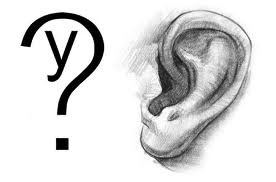
Ask lots of questions. Make sure you are asking questions that get the person to reflect and have to think about the answer. Yes or no questions at times are okay, as long as you follow up with another question to find out why. Why questions are very powerful to find out the true meaning of something or the reasoning behind the way someone does something or acts a certain way. By asking question you will build additional trust, because you have shown an interest in that persons wants and needs. Notice in the picture above that the outside of the ear is shaped like a question mark and the inside like a 'y' (why)? I don't think this is a coincidence! 

Explore

After listening and asking questions you must then explore so more. You have now built some trust so asking exploring questions and listening some more will not seem like an inquisition but a way to help. Exploration is about finding a path, the answer to one of your questions, and following that path to the end to see where it takes both of you. Exploration is not just for you, but also for the student/employee to go on. Explore the answers and take that path to see where it goes. If you just "ask" questions you might not find the right path unless you explore the answers to those questions. It is important that you guide the individual down the path and let them make their own discoveries or new paths as you go. When you get to the end of the path you will know it, you will see it in their eyes; that "AHA" moment.

Commitment

Once you have asked questions, listened, and explored the paths those questions led you down, the next step is commitment. You must get a commitment from the individual that this is the right path to be on. By seeking a commitment you will be able to then set a timeline for the commitment and it will lead you to your next step. This commitment is a 2-way street, the individual is committing to you that they will follow the path to the end and you are committing to them that you will be there walking the path with them. This is where you will set forth a timeline for which to reach the end of the path, but it is important that we set way-points along the way to stop and measure the progress to determine if we are still on track. You will both need to set specific measurement criteria to determine that you are on track to reach the goal. The commitment is not just for the goal, but also for each way-point and measurement criteria.

Challenge

Now that you have built trust by listening, asking questions and exploring; and now that you have both committed to the journey, it is time for the challenge phase. You can not challenge or push someone if they are not committed to the process. By this time, you have built trust and as long as you continue the steps above you will be able to challenge your student to push for more. During this phase you will use the timeline and specific goals to measure the progress and challenge them to go further. 

Take them where they CAN go

There is one thing I have left out that is important, take them where they CAN go. You will find individuals or groups that are either content to reach a certain level, don't believe they can move beyond that level or maybe they have failed to reach a certain level and given up on obtaining it. It is your job to take them where they CAN go, not just where they want to go. This is part of the challenge step and can only be truly realized once you have complete trust and they see they are making progress toward the commitment.

These are not all of the tools you need in your toolbox to be an effective coach, but they are the ones you must utilize to get the most out of your coaching sessions. Have you ever wondered why in professional sports that in Football they refer to the Head Coach, but in Baseball the refer to the Manager? Sure there are times when a baseball manager is referred to as coach, but more often than not he is referred to as the manager. Why is that, leave me your thoughts.

Thursday, January 26, 2012

Manager, Leader or Coach, who are you?

Are you a manager, leader or coach? Maybe a combination of all of the above? There are differences and I wanted to take a moment to highlight the differences. First let's look at the definitions:

Manage -to take charge or care of; to dominate or influence; to handle, direct, govern, or control in action or use


Lead to go before or with to show the way; to influence or induce; to guide in direction, course, action, opinion, etc.


Coacha person who trains an athlete or a team of athletes; to give instruction or advice to in the capacity of a coach; instruct


Each of these have very different meanings but they are used interchangeably on a regular basis. Why are these words used so loosely in the "management" roles of business. I believe that there is a lack of understanding of the meaning of each and that some use them as buzz words. 

It is my belief that you manage things not people. The definition itself contains words like dominate, control, influence and govern. If I were to give your employees this list of words to describe you would they agree? I don't think any of us want to be known as someone who dominates, controls and governs our employees, so why do we call ourselves managers? That's is just what the title has always been. Break out of the mold, just because it has always been that way doesn't mean we must continue it. If that were the case we would all be traveling to work in a horse drawn carriage.

Leaders as the definition explains are there to go before or show the way, to guide and to influence or induce. I love the word leader as it reminds us all that we are supposed to be setting the example (to go before) and let's our employees know that we are in this together. A leader is not someone who points down the path and states "Go that way". By definition you would then be a manager because you are giving directions.

Coaches are people who train, give instruction or advice to their employees. I have heard the definition for coach explained as taking people where they want to go. I think this is a good definition but I would change it from "...where they want to go" to "...where they CAN go". As a coach it is my job to get the best out of my athlete or employee. I don't want to take them just to the place they think they can go to, but to their full potential. We all have preconceived notions about how far we can go mentally, physically and emotionally; but we have all been pushed beyond those boundaries at some point in our life. I know I have and I KNOW my wife has; my wife can't get a shot without passing out, but she gave birth to our second boy the all natural way. No medicines to dull the pain at all; now if she would of had a choice I know she would have opted for the drugs! She was pushed beyond her preconceived parameters of pain and what she thought she could deal with.


So who do you want to be? I feel that we need to have all of the traits: manager, leader and coach. There are times when we are going to have to manage things, we need to go before and show our people where we want to go and we need to coach our employees to take them to where they can go.


In my next post I will focus on coaching and what I feel is important in the coaching role. 


If you have feedback, please don't hesitate to critique my post. I can not get better if I don't get feedback. Please let me know if there is a topic you would like to hear about.